
When a loved one is unwell, the thought of long hospital stays, infection risk, and emotional stress can be overwhelming. In cities like Thane, many families today are choosing a mini home ICU setup for stable patients who need close monitoring but not continuous hospital admission.
A home ICU does not mean turning your house into a hospital. It simply means creating a safe, medically supervised care space with the right equipment, environment, and professional guidance — so recovery can happen comfortably at home.
This guide explains what a mini home ICU really is, who needs it, what essentials are required, and how to set it up safely — without panic or unnecessary expense.
(Disclaimer: A home ICU should only be set up after consultation with a doctor. It is meant for stable patients, not for emergencies requiring hospital ICU care.)
What Is a Mini Home ICU?
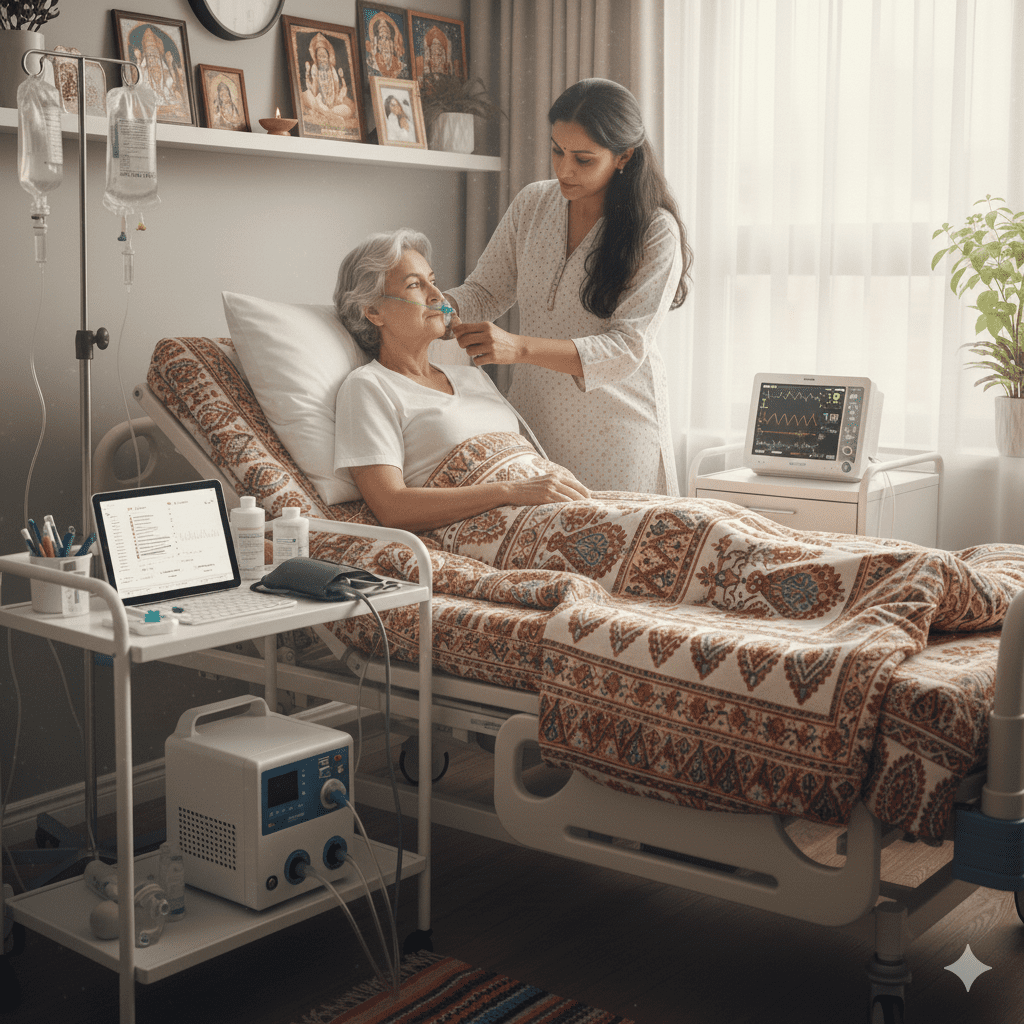
A mini home ICU is a dedicated care area at home equipped with essential monitoring and life-support equipment for patients who need continuous observation.
It is commonly used for patients recovering from serious illness, surgery, or respiratory conditions who are stable but still require oxygen support, vital monitoring, nursing care, or mobility assistance.
The key difference from a hospital ICU is that home ICUs are for stable patients, not for those needing ventilators, emergency drugs, or round-the-clock doctors on site.
Who May Need a Home ICU Setup
Doctors may recommend a mini home ICU for patients such as:
- Elderly patients recovering after prolonged hospitalisation
- Post-COVID or pneumonia patients needing oxygen support
- Patients with chronic lung or heart disease requiring monitoring
- Stroke or neurological patients needing nursing care
- Post-surgical patients who are weak but stable
If a patient requires frequent emergency interventions, invasive ventilation, or ICU drugs, hospital care is always safer.
Choosing the Right Room at Home
The room you choose is just as important as the equipment. Ideally, it should be:
- Well-ventilated, clean, and quiet
- Close to a bathroom
- Large enough to accommodate equipment and caregiver movement
- Away from smoke, kitchen fumes, or dust
Good lighting, easy access to electrical sockets, and space for a hospital bed are essential.
- Well-ventilated, clean, and quiet
Essential Equipment for a Mini Home ICU
At the heart of a home ICU is monitoring and support, not heavy machinery.
Most setups include a hospital bed with adjustable head and leg support, which helps in breathing, feeding, and nursing care. A mattress designed to prevent bed sores is crucial for patients who remain in bed for long hours.
Continuous monitoring is done using a pulse oximeter to track oxygen levels and a BP monitor to observe blood pressure trends. A thermometer should be kept nearby for regular temperature checks.
For patients needing oxygen, a doctor-prescribed oxygen concentrator or cylinder is the most important support device. Suction machines may be needed if the patient has difficulty clearing secretions.
If breathing treatments are prescribed, a nebulizer should be available. For nutrition or hydration support, infusion stands and feeding pumps may be added as advised by the medical team.
Power Backup and Safety Considerations
Electricity is critical for home ICU equipment. Families in Thane should ensure:
- A reliable inverter or power backup
- Proper earthing and extension boards
- No overloading of sockets
Oxygen equipment should be placed away from open flames, incense sticks, or smoking areas. Fire safety and ventilation must never be compromised.
Faster Care Tip: Skip the pharmacy rush! Order your essentials medicines online — it’s fast, safe, and delivered right to your doorstep. A few clicks today can save you a last-minute pharmacy run tomorrow.
Nursing and Medical Support at Home
A home ICU is incomplete without trained human support. Depending on the patient’s condition, doctors may advise:
- Trained home ICU nurse (day or 24-hour)
- Regular doctor visits or teleconsultations
- Physiotherapy or respiratory therapy sessions
Family members should be taught basic care skills such as repositioning the patient, checking vitals, recognizing warning signs, and maintaining hygiene.
When Home ICU Is NOT Enough
Despite the best setup, some situations need immediate hospital care. These include:
- Sudden drop in oxygen saturation
- Severe breathlessness or chest pain
- Altered consciousness or confusion
- Persistent high fever
- Equipment failure with worsening symptoms
Families should always have an emergency hospital contact and ambulance number ready.
Typical Cost Range in Thane (Approximate)
A basic home ICU setup cost varies depending on duration and equipment:
- Equipment rental: moderate daily or monthly charges
- Nursing care: depends on hours and skill level
- Doctor visits: as per consultation schedule
Compared to prolonged hospital ICU stays, home ICUs are often more affordable and emotionally comfortable, when medically appropriate.
Setting up a mini home ICU is about planning, safety, and medical guidance, not fear.
If the patient is stable, the doctor agrees, and the right equipment and nursing support are in place, home ICU care can offer:
- Faster emotional recovery
- Lower infection risk
- Better family involvement
- Comfort of being at home
The key is to remember:
A home ICU supports recovery — it does not replace emergency care.
When done correctly, it turns your home into a place of healing, not anxiety.

Dr Tanvi Modi,
MBBS,
MD, DNB (Paediatrics)
Last medically reviewed on September 25, 2025 by Dr Tanvi Modi, MBBS, MD, DNB (Paediatrics)