“Just eat properly and everything will be fine.”
Almost every Indian woman has heard this from her mother or grandmother at some point. During periods, exams, pregnancy or after delivery, food is always the first advice.
But what does “eat properly” really mean?
Is it eating double quantity? Adding extra ghee to everything? Or simply filling your stomach with rice and roti?
Not really.
A balanced diet is not about eating more. It is about eating the right combination of foods in the right proportion. The good news is that you don’t need fancy salads or expensive superfoods. Regular home-cooked Indian food is more than enough when your plate is balanced correctly.
Why nutrition is especially important for women
A woman’s body is constantly adapting. Hormonal changes, menstruation, pregnancy, breastfeeding and recovery after childbirth all increase nutritional demands.
During pregnancy and postpartum, you are not just eating for yourself. Your body is building, nourishing and healing another life too. This makes balanced nutrition essential, not optional.
When meals are heavy in rice or roti but low in vegetables and protein, it often leads to tiredness, anemia, weakness and slow recovery. Small changes in the way you build your plate can make a big difference.
The simplest way to plan your meal: Divide your plate
Instead of counting calories or following complicated charts, imagine your plate divided into sections.
Half the plate should be vegetables and fruits.
One quarter should be cereals or millets.
One quarter should be protein and dairy.
Small portions should include nuts, seeds and healthy fats.
No matter how many calories you need, this proportion stays the same. Only the quantity changes.
Half your plate: Vegetables and fruits
This is the most important part of the meal and also the most commonly ignored.
Many of us eat two or three rotis with very little sabzi. Ideally, it should be the opposite. Vegetables should take up the most space on your plate.
They provide vitamins, minerals, iron, calcium and fiber. They improve digestion, prevent constipation, boost immunity and help your body absorb nutrients better. This is especially helpful during pregnancy, when digestive issues are common.
Include a variety of seasonal and colorful options such as green leafy vegetables like palak, methi and bathua; roots like gajar, chukandar and mooli; gourds like lauki, tori and kaddu; and fresh fruits like banana, guava, papaya and oranges.
A simple rule to remember is that the more colorful your plate looks, the more nutritious it usually is.
One quarter: Cereals and millets for energy
Carbohydrates are often blamed for weight gain, but they are your body’s main source of energy. The key is choosing the right type.
Complex carbohydrates give slow and steady energy and keep you full for longer. These include whole wheat roti, brown rice, oats and traditional millets like ragi, bajra and jowar.
Refined options like white bread, maida products and excess white rice can cause quick sugar spikes and leave you feeling hungry again soon.
Simply replacing part of your regular grains with whole grains or millets can improve digestion and energy levels without changing your traditional meals too much.
One quarter: Protein and dairy
Protein is one nutrient many Indian women do not get enough of, even though it is essential for strength and recovery.
Protein supports muscle repair, hormone balance, immunity and tissue growth. During pregnancy and after delivery, it becomes even more important for healing and for the baby’s development.
If you are vegetarian, include dals, chana, rajma, lobia, sprouts, paneer or tofu regularly. If you eat non-vegetarian food, eggs, chicken, fish and meat are good sources of high-quality protein.
Fish also provides healthy fats that support heart health and brain development of the baby, though it is better to choose low-mercury varieties.
Dairy products such as milk, curd and buttermilk are excellent for calcium, which helps maintain strong bones. If you are lactose intolerant, plant-based alternatives like almond milk or soy milk can be used.
Quick tip
While we focus on the plate, the glass matters too. Traditional Indian drinks like Sattu water, Chaas (Buttermilk), and Coconut water are excellent for staying hydrated and managing pregnancy-related bloating or acidity.

Nuts, seeds and healthy fats
Even though they are eaten in small quantities, nuts and seeds add important nutrients.
A small handful of almonds, walnuts, peanuts or seeds like til or flax seeds provides healthy fats that support brain function, heart health and hormone balance. A little ghee or traditional oils in cooking is also perfectly fine when used in moderation.
Faster Care Tip: Skip the pharmacy rush! Order your baby care essentials and medicines online — it’s fast, safe, and delivered right to your doorstep. A few clicks today can save you a last-minute pharmacy run tomorrow.
The hidden benefits of Indian spices
Our everyday spices do more than add taste. Ingredients like turmeric, jeera, hing, methi, dalchini and saunf help digestion and support metabolism. The traditional Indian tadka actually adds both flavor and health benefits to meals.
So there is no need to avoid spices unless medically advised.
Common myths many families still believe
There are a few food beliefs that often create confusion.
Eating for two during pregnancy does not mean doubling your food. You need better nutrition, not double quantity.
Adding too much ghee does not make delivery easier. Excess only increases unnecessary calories.
Fruits are not “cold” foods that should be avoided. They are important sources of vitamins and fiber.
Protein is not only for gym-goers. It is essential for every woman.
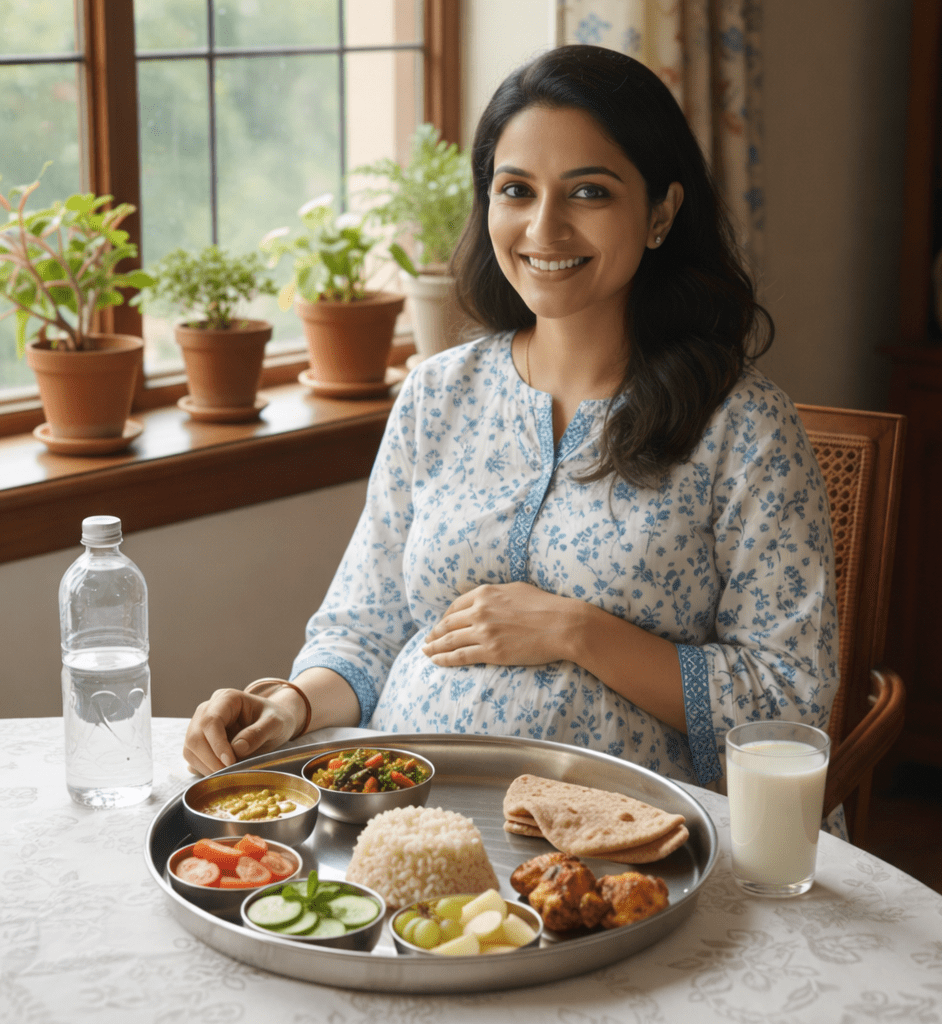
A balanced Indian meal can be very simple. For example, a plate with mixed sabzi and salad filling half the space, one or two rotis or some brown rice, a bowl of dal or paneer, curd on the side and a small handful of nuts during the day already meets most nutritional needs.
No complicated recipes or expensive ingredients are required. Just the right proportion of everyday foods.
Healthy eating does not mean strict dieting or giving up your favorite foods. It simply means building your plate thoughtfully.
Home-cooked Indian meals, when balanced well, are more than enough to keep you energetic, strong and nourished at every stage of life.
Small consistent changes today can make a big difference to how you feel tomorrow.
Last medically reviewed on January 20, 2026 by Dr. Bhavya Doshi Jain
MBBS (AFMC), MS, FMAS, MNAMS, PDCC ( AIIMS R)
Consultant Obstetrician and Gynecologist