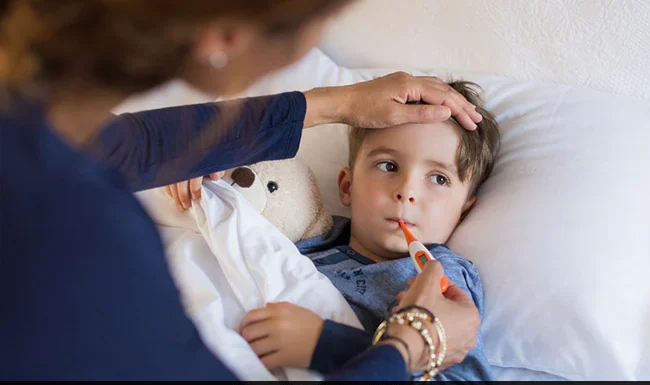
Cold and cough in babies — every Indian parent’s unofficial rite of passage. The tiny human is sniffling, the whole house is awake, and at least three relatives have already prescribed three completely different “sure-shot” remedies. The good news: most colds are mild and get better on their own in about a week—with simple, safe care at home.
What a normal baby cold looks like
Babies get colds because their immune system is still “in training”, especially if they go to daycare or have older siblings. Typical cold symptoms are runny or blocked nose, mild cough, sneezing, slight crankiness, and maybe low-grade fever.
If the baby is feeding reasonably well, waking up for feeds, and breathing comfortably, it’s usually a simple viral cold that needs comfort care more than medicines.
Evidence-based home remedies that actually help
Here are things that are safe, gentle, and backed by pediatric guidance—not WhatsApp University:
1. Saline nasal drops + gentle suction
Use over-the-counter saline (normal salt water) drops—2–3 drops in each nostril—and then gently suction with a bulb syringe for younger babies, especially before feeds and sleep. This helps them breathe and feed better by clearing thick mucus.
2. Steam and humid air (but safely!)
Instead of making the baby “inhale steam” over a hot vessel (risky and causes burns), sit with the baby in a closed bathroom while hot water runs in a bucket/shower to create gentle steam in the room. Keep the baby at a safe distance from any hot water. A cool-mist humidifier in the bedroom at night can also ease congestion.
3. Extra feeds and fluids
For babies under 6 months, offer more frequent breastfeeds or formula feeds; for older babies taking solids, offer small sips of water (if already advised by your pediatrician) and usual milk. Hydration thins the mucus and helps recovery.
4. Honey (only after 1 year)
For children older than 1 year, ½ to 1 teaspoon of honey before bedtime can reduce night-time coughing and improve sleep. Never give honey to babies under 1 year because of the risk of infant botulism.
5. Comfort, cuddles, and rest
Skin-to-skin contact, holding the baby more, and keeping them a little upright after feeds can help with comfort and breathing. A slightly elevated head-end of the mattress (by placing a towel under the mattress, not a pillow under the baby’s head) may ease congestion.
Common Indian “nuskhe” – what’s safe and what to avoid
Indian homes are full of remedies; some are harmless, some are risky, and a few are just comedy material. A quick reality check:
Ajwain potli / ajwain fumes
Dry-roasted ajwain (carom seeds) in a cloth potli kept near the baby (not on the skin, not hot) may give a gentle comforting smell. Avoid holding the smoke/fumes directly near the baby’s face or nose—this can irritate tiny airways.
Warm mustard oil with garlic / ajwain massage
A gentle massage can relax the baby, but:
Oil should be only lukewarm (test on your own skin first).
Never apply hot oil.
Avoid putting oil on the chest and then covering with tight layers that cause overheating.
Do not put oil inside the nose.
“Thoda sa brandy/rum” in milk or on the chest – big NO
Alcohol in any form (by mouth or on the skin) is dangerous for babies. It can cause low sugar, breathing issues, and even coma. Definitely not “thoda sa theek hai”.
Vicks / balms on chest or under nose
Strong medicated balms are not recommended directly on babies’ skin or under their nose, especially under 2 years, as they can irritate the airways and eyes. If your pediatrician specifically allows, they may suggest a baby-safe formulation and correct way to use it—but don’t self-experiment.
Parent Tip: Keep your baby’s nose clear before feeds and sleep – babies can’t drink milk and breathe through a blocked nose at the same time.

Safe medicines: what Indian parents commonly use (and why not to self-medicate)
This is the part where most parents open the medicine drawer and pick “jo pichli baar diya tha”. Try not to do that. Babies’ doses depend on weight, age, and current illness. Always read labels and cross-check with your pediatrician.
Paracetamol (e.g., Calpol, Crocin drops, Pacimol)
Used for: Fever causing discomfort, body ache.
Only give correct dose based on baby’s weight and age.
Stick to recommended gap between doses (usually 4–6 hourly, but follow your doctor’s instructions).
Ibuprofen (e.g., Ibugesic Plus pediatric formulations, Meftal-P in some settings)
Used for: Fever and pain in older infants and children.
Not usually first choice in very young infants; should be used only if your pediatrician recommends and prescribes dose.
Nasal saline drops / sprays (various brands)
Safest “medication” for cold; can be used multiple times a day as advised.
Now, the important warning list—medicines that are commonly used in India but should never be started on your own in babies without pediatric guidance:
Cough and cold combination syrups (containing antihistamines, decongestants, and cough suppressants like Sinarest, T Minic, Wikoryl, etc.)
Routine use in children under 4–6 years is strongly discouraged due to side effects (drowsiness, fast heart rate, breathing issues) and limited benefit.
In India, they are often prescribed, but always under strict pediatric supervision with right dose and duration.
Antihistamine syrups (like Cetirizine, Cetrizine, Chlorpheniramine, Diphenhydramine / Benadryl-type formulations)
Can cause excessive sleepiness, irritability, or paradoxical agitation in young children.
Use only when your pediatrician clearly prescribes for a specific indication.
Nebulizers and inhalers
Many parents start “saline nebulisation” or even nebulised bronchodilators on their own. Nebulizers are not needed for every cough or cold. They are meant for specific conditions like bronchiolitis or wheeze and only under medical advice.
In short: it is okay to recognize the brand names—but not okay to play baby chemist. Always confirm with your pediatrician before giving any medicine.
When you must call or visit your pediatrician
A few red flags need immediate medical attention:
Baby is breathing fast, with chest pulling in or flaring of nostrils.
Grunting, noisy breathing, or you feel “something is not right” with their breaths.
Refusing feeds repeatedly, fewer wet diapers, or very lethargic / floppy.
Fever:
Any fever (≥38°C / 100.4°F) in a baby less than 3 months needs urgent evaluation.
Fever persisting beyond 3 days in older babies.
Bluish lips or face, or baby looks unusually drowsy or difficult to wake.
Cold and cough dragging on beyond 10–14 days or worsening instead of improving.
Faster Care Tip: Skip the pharmacy rush! Order your baby care essentials and medicines online — it’s fast, safe, and delivered right to your doorstep. A few clicks today can save you a last-minute pharmacy run tomorrow.
Final reassurance for tired, worried parents
Indian parenting comes with bonus background commentary from neighbours, relatives, and random aunty in the lift. You don’t have to follow every piece of advice—your first reference should be your pediatrician and evidence-based care.
If you:
Keep the baby hydrated,
Use saline and safe steam methods,
Avoid risky “nuskhe” and self-medication, and
Ask for help when red flags appear,
you’re already doing an excellent job—even if your hair is a mess and there are dark circles under your eyes.
The cold will go; your baby will go back to smiling at ceiling fans; and you’ll have survived another “parenting exam” with flying colours.
Last medically reviewed on September 18, 2025 by Dr Tanvi Modi, MBBS, MD, DNB (Paediatrics)
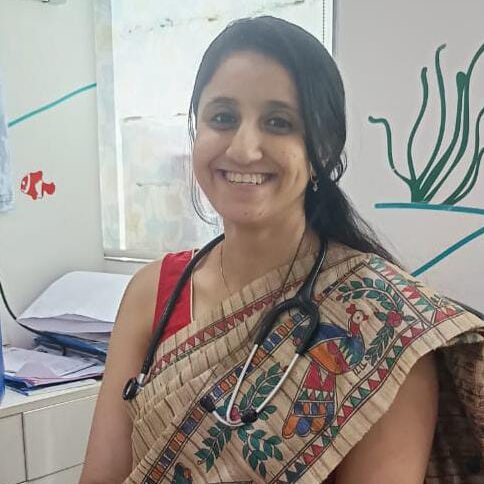
Dr Tanvi Modi,
MBBS,
MD, DNB (Paediatrics)