
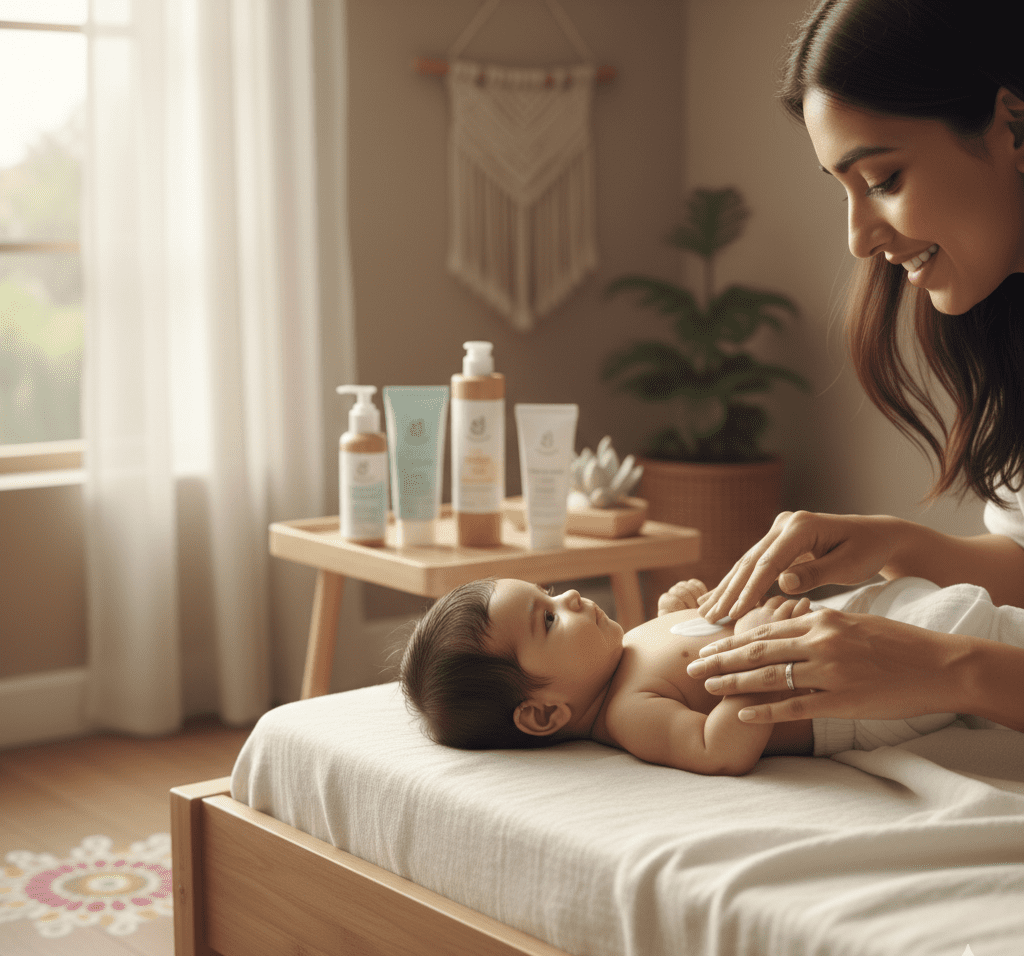
A baby’s skin looks soft and perfect, but in reality it is much thinner and more sensitive than adult skin. That’s why rashes, dryness, redness, or sudden itching can appear even after using something that worked “perfectly fine” for another child.
In Indian families, skincare advice comes from everywhere — dadi’s nuskhe, neighbour’s suggestions, Instagram reels, and shopkeeper recommendations. Some are harmless, some help, and some quietly damage the baby’s skin barrier.
The good news is: most baby skin problems can be prevented if you understand what baby skin actually needs — and what it doesn’t.
This guide explains how to choose safe baby skincare products, what dermatologists usually recommend, and how to care for sensitive baby skin without overdoing it.
What Makes Baby Skin So Sensitive
Baby skin is still developing. The outer protective layer, called the skin barrier, is thinner and loses moisture faster. This makes babies more prone to dryness, rashes, heat irritation, and reactions to strong products.
In Indian weather — with heat, humidity, sweating, and frequent bathing — baby skin gets stressed even more. Add fragranced soaps, harsh wipes, or frequent oil changes, and irritation becomes common.
That’s why “natural” doesn’t always mean safe, and “baby product” doesn’t always mean gentle.
Common Baby Skin Problems Indian Parents See
Most parents notice issues like diaper rashes, dry patches on cheeks, redness in neck folds, tiny bumps on the face, or rough skin on arms and legs. Sometimes the skin looks fine in the morning and irritated by evening.
In most cases, this is not an allergy or disease — it’s the skin reacting to heat, friction, saliva, urine, or unsuitable products.
The solution is usually simpler care, not more products.
How Dermatologists Think About Baby Skincare
Dermatologists focus on three simple goals for baby skin:
First, clean gently without stripping natural oils.
Second, lock in moisture to protect the skin barrier.
Third, avoid unnecessary ingredients that can irritate.
They usually recommend minimal skincare, especially in babies with sensitive or rash-prone skin.
Choosing the Right Baby Cleansers and Soaps
Babies do not need strong soaps. In fact, daily use of harsh cleansers is one of the biggest reasons for dryness and rashes.
A good baby cleanser should be mild, soap-free, and pH-balanced. It should clean sweat and dirt without leaving the skin tight or squeaky. If after bathing the skin looks dry or white patches appear, the cleanser is too strong.
Daily bathing is okay in Indian weather, but the cleanser does not need to be used every single time. On some days, plain lukewarm water is enough.
Moisturising: The Most Important Step
Moisturising is not optional for babies with sensitive skin — it is essential.
Dermatologists usually advise applying a moisturiser within a few minutes after bath, when the skin is still slightly damp. This helps trap moisture and strengthens the skin barrier.
Thick creams or lotions work better than very light liquids, especially in babies with dryness or eczema-like patches. Oils can be helpful, but they should not replace a proper moisturiser if the skin is very dry.
Consistency matters more than brand names.
Baby Oils: Traditional but Use with Care
Oil massage is a beautiful Indian tradition and has benefits for bonding and relaxation. However, not every oil suits every baby.
If a baby develops redness, rashes, or itching after oil massage, it’s a sign that the skin is reacting. In such cases, dermatologists may suggest stopping oil temporarily or switching to lighter, non-irritating options.
Oil should never be left on the skin for very long hours, especially in hot weather, as it can block pores and worsen heat rashes.
Diaper Area Care: Where Most Problems Start
The diaper area is warm, moist, and sensitive — making it the most common place for rashes.
Keeping the area clean and dry is more important than using multiple products. Gentle cleaning, frequent diaper changes, and a protective barrier cream help prevent irritation.
Avoid using wipes with strong fragrance or alcohol on sensitive skin. Sometimes, soft cotton and plain water work better than fancy wipes.
If redness doesn’t improve in 2–3 days, it’s time to consult a doctor rather than trying new products repeatedly.
What Ingredients to Avoid in Baby Skincare Products
Dermatologists usually caution parents to avoid products with strong fragrance, alcohol, artificial colours, or unnecessary herbal mixes. These ingredients increase the risk of irritation, especially in babies with sensitive skin.
Essential oils, menthol, camphor, and strong antiseptics should never be applied to baby skin unless specifically prescribed.
More ingredients do not mean better care. Simpler formulas are usually safer.
Common Myths Indian Parents Hear
Many parents are told that frequent bathing causes cold — this is not true if the baby is dried properly and kept warm.
Another common belief is that powders prevent rashes. In reality, powders can clump in skin folds and worsen irritation if overused.
Some families believe “natural homemade mixtures” are always safe. But baby skin reacts to many natural substances too.
Listening to advice is fine — blindly following all of it is not.
When to See a Doctor
You should consult a pediatrician or dermatologist if the baby has persistent redness, oozing, cracked skin, severe itching, or rashes that keep returning. Also seek help if the baby seems uncomfortable, cranky, or scratches often.
Early guidance prevents small skin issues from becoming long-term problems.
Faster Care Tip: Skip the pharmacy rush! Order your essentials medicines online — it’s fast, safe, and delivered right to your doorstep. A few clicks today can save you a last-minute pharmacy run tomorrow.
Final Reassurance for Parents
Caring for a baby’s skin does not require a shelf full of products. It requires gentle hands, simple choices, and consistency.
If you bathe gently, moisturise regularly, avoid harsh ingredients, and don’t panic at every small rash, you are already doing a great job.
Baby skin grows stronger with time. Until then, less is more — and love, patience, and simple care go a long way.
Last medically reviewed on October 25, 2025 by Dr Tanvi Modi, MBBS, MD, DNB (Paediatrics)

Dr Tanvi Modi,
MBBS,
MD, DNB (Paediatrics)