
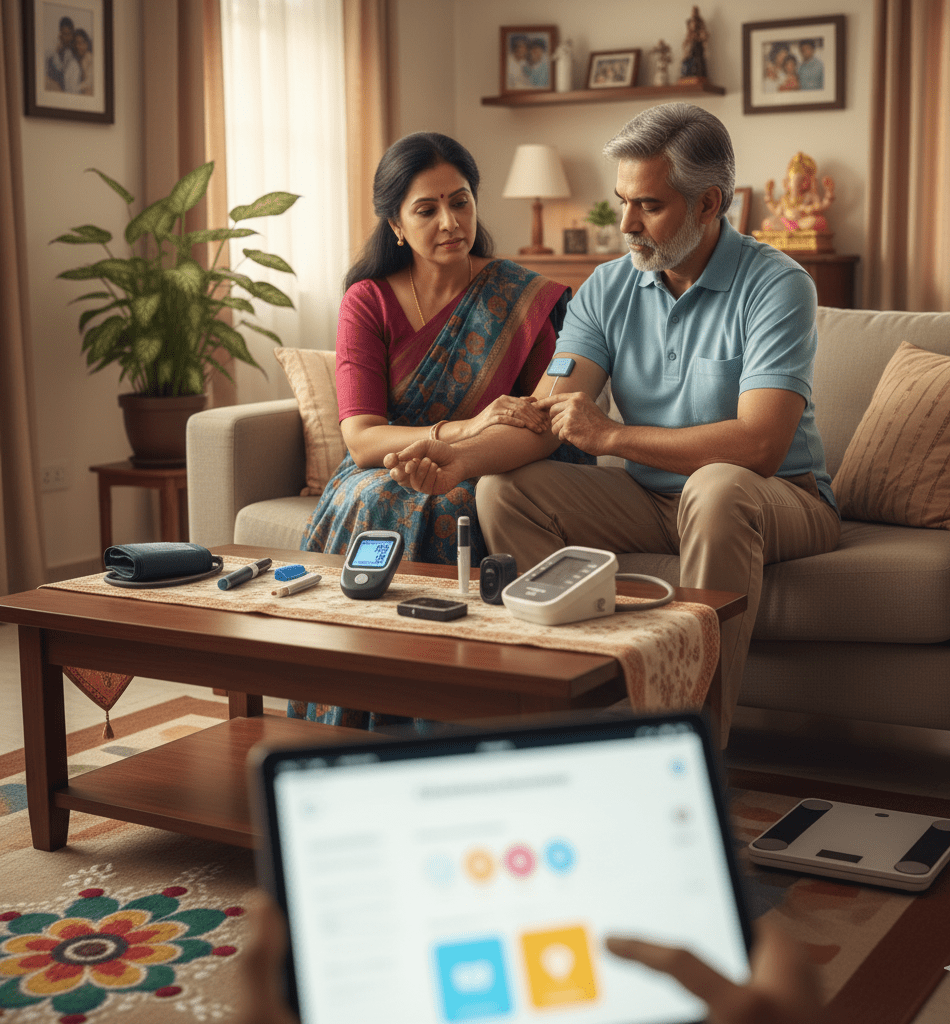
Diabetes is no longer an occasional health topic in Indian homes — it has become part of daily family conversations. From elders checking sugar levels every morning to younger adults managing lifestyle-related diabetes, the condition needs regular monitoring, not panic.
Managing diabetes well at home is not about having many medicines — it is about having the right medical devices that help track sugar, prevent complications, and alert you early when something is going wrong. This guide explains the essential devices every diabetic patient should have at home, why they matter, and how to use them safely.
(Disclaimer: Home monitoring devices support diabetes care but do not replace doctor visits, lab tests, or medical treatment.)
Why Home Monitoring Is Crucial in Diabetes
Diabetes does not usually cause pain until complications begin. High or low blood sugar levels can silently damage the heart, kidneys, eyes, and nerves. Regular home monitoring helps detect patterns early and allows doctors to adjust treatment before complications develop.
For elderly patients, people on insulin, or those with fluctuating sugar levels, home devices act like an early warning system.
Glucometer – The Most Important Device for Every Diabetic Patient
A glucometer is the foundation of diabetes management at home. It measures blood glucose levels using a small finger-prick sample and gives results within seconds. This allows patients to check fasting sugar, post-meal sugar, or random readings whenever symptoms like dizziness, sweating, or weakness occur.
Accurate home sugar readings help patients understand how food, stress, illness, or missed meals affect their sugar levels. Over time, this helps in making better dietary choices and improves medication compliance.
For reliable results, glucometers should be used with clean hands, fresh test strips, and proper storage. Abnormal readings should always be discussed with a doctor rather than adjusted at home.
BP Monitor – Because Diabetes and Blood Pressure Go Together
A glucometer is the foundation of diabetes management at home. It measures blood glucose levels using a small finger-prick sample and gives results within seconds. This allows patients to check fasting sugar, post-meal sugar, or random readings whenever symptoms like dizziness, sweating, or weakness occur.
Accurate home sugar readings help patients understand how food, stress, illness, or missed meals affect their sugar levels. Over time, this helps in making better dietary choices and improves medication compliance.
For reliable results, glucometers should be used with clean hands, fresh test strips, and proper storage. Abnormal readings should always be discussed with a doctor rather than adjusted at home.
Pulse Oximeter – Helpful During Illness or Infections
While not required daily, a pulse oximeter becomes very useful when a diabetic patient develops fever, chest infection, or breathlessness. Diabetes increases the risk of severe infections, and oxygen levels can fall silently during illness.
Monitoring oxygen saturation at home helps families decide when home care is enough and when hospital care is needed. This device is particularly helpful for elderly diabetic patients or those with heart and lung problems.
Digital Thermometer – Simple but Essential
Infections in diabetic patients can worsen quickly. A digital thermometer helps track fever accurately and ensures timely medical attention.
Diabetics should never ignore persistent fever, even if it seems mild. Early detection reduces the risk of complications like foot infections, pneumonia, or urinary tract infections.
Weighing Scale – Tracking Hidden Warning Signs
Sudden weight loss or unexplained weight gain can signal poor sugar control or medication-related issues. A simple digital weighing scale helps track body weight trends over time.
For diabetic patients, stable weight often reflects better sugar management, while sudden changes should prompt medical consultation.
Faster Care Tip: Skip the pharmacy rush! Order your essentials medicines online — it’s fast, safe, and delivered right to your doorstep. A few clicks today can save you a last-minute pharmacy run tomorrow.
Foot Care Tools – Often Ignored but Extremely Important
Diabetes affects nerves and blood flow, especially in the feet. Minor cuts or pressure points can turn into serious ulcers if unnoticed.
At home, diabetic patients should have basic foot-care support such as a mirror to inspect soles, nail clippers used carefully, and clean footwear. Daily foot inspection helps prevent infections that may otherwise go unnoticed due to reduced sensation.
This is not about treatment — it is about prevention.
Medication Organizer and Reminder Tools
Many diabetic patients take multiple medicines daily — sugar tablets, insulin, BP medicines, cholesterol tablets, and supplements. A pill organizer helps prevent missed or double doses.
Consistent medication timing is just as important as the medicine itself in diabetes control.
When Insulin Is Used – Additional Essentials
For patients on insulin, proper storage and handling tools become necessary. This includes clean injection supplies, safe disposal containers for needles, and temperature awareness for insulin storage.
Improper insulin storage can reduce effectiveness and lead to unstable sugar levels.
Devices That Are Helpful but Not Mandatory
Advanced devices like continuous glucose monitors or smart apps can be useful for selected patients but are not essential for everyone. Most Indian families can manage diabetes effectively with basic, reliable home monitoring tools and regular doctor follow-ups.
Common Mistakes Families Should Avoid
Many families check sugar irregularly, reuse lancets, store strips incorrectly, or change medicine doses based on one reading. These practices lead to confusion rather than control.
Home devices should guide conversations with doctors — not replace them.
Final Takeaway for Indian Families
Managing diabetes at home is about awareness, routine, and consistency, not fear. With the right basic medical devices, families can detect problems early, avoid emergencies, and support long-term health.
If you ensure:
- Regular sugar monitoring
- Blood pressure tracking
- Early detection of fever or breathlessness
- Proper foot care and medication adherence
you are already doing more than half the work of diabetes management.
Diabetes is a long journey — but with the right tools at home, it becomes a manageable one, not a frightening one.
Last medically reviewed on October 25, 2025 by Dr Tanvi Modi, MBBS, MD, DNB (Paediatrics)
Dr Tanvi Modi,
MBBS,
MD, DNB (Paediatrics)