
The first few weeks with your baby are filled with sweet surprises—tiny smiles, curious gazes, and more confidence in feeding. But many parents still wonder: “Is my baby developing normally?” These questions are completely natural. Babies grow at their own pace, yet there are developmental milestones—little checkpoints—that help reassure you about their progress.
Your pediatrician will assess these milestones during routine visits, but as a parent, you can also watch for them at home. Observing how your baby moves, responds, and communicates adds an extra layer of care and confidence in their journey.
What changes do you see between 4 weeks and 2 months?
By now, your baby is spending more awake time studying the world. You may notice them gazing at you with interest when you speak, as though trying to join the conversation. Their neck strength has improved too—head movements are freer, and they latch onto the breast more easily.
Sleep is still a big part of life—about 15 to 16 hours a day. But in between naps, your little one is getting better at recognizing patterns. Familiar, repetitive sounds may no longer grab their full attention, while new voices or objects spark fresh curiosity.
What can babies do by the age of 2 months?
The second month is full of small but exciting advances. During tummy time, your baby now stretches out their legs, lifts their chin, and can momentarily raise the head in line with the body if supported under the tummy (ventral suspension). When you lift them from lying on their back, the head briefly follows the body before lagging—showing growing neck control between 4 and 8 weeks.
Communication also takes a leap. At around 6 weeks, many babies begin to smile back when spoken to. This “social smile” usually appears between 6 to 8 weeks—a heartwarming response that parents treasure. Interestingly, even a simple face-sized card with two dots for eyes can sometimes trigger a smile!
Your baby can now follow a moving object not just sideways through 90 degrees, but also vertically. When hungry, in pain, or uncomfortable, they let you know with whimpers or louder cries—early forms of communication that show just how tuned in they are.
How can you support your baby’s development at this stage?
At this age, playful, simple activities go a long way. Tummy time can now be extended to 15–20 minutes of supervised play, helping strengthen the neck, shoulders, and arms. Lying down at your baby’s level or placing a toy within sight encourages lifting and looking.
Gently moving your baby’s ankles in a cycling motion supports motor development, while offering colorful toys to reach for strengthens fine motor skills. Since vision is improving, showing smiling faces or family photos helps them focus and recognize.
Talking remains one of the most powerful tools. Whether during playtime or diaper changes, your voice builds bonding and lays the groundwork for language. Add songs with actions, like “The Wheels on the Bus,” to support word association and rhythm. Babies also enjoy clapping along or tapping their feet, which sharpens listening skills.
Introducing a baby-safe mirror is another fun idea—it helps your little one slowly recognize themselves, supporting both social and emotional growth.
Parent Tip: You may feel silly narrating every diaper change or singing nursery rhymes on repeat, but to your baby, your voice is the most soothing and stimulating sound.

When should you see the pediatrician?
By the end of the second month, check with your pediatrician if your baby does not startle at loud noises or doesn’t focus on your face when you speak. These could be early signs to evaluate hearing or vision.
Remember, every child develops differently. Some may take a little longer to show certain milestones, and that’s okay. But when in doubt, a quick conversation with your pediatrician offers peace of mind.
The period from 4 weeks to 2 months is a beautiful time of change—better head control, the first social smiles, and growing curiosity about faces and sounds. Each little milestone tells you your baby is adjusting, learning, and bonding more deeply with you. With gentle play, loving attention, and routine checkups, you’re giving your newborn the best possible start.
At Faster Pharmacy, we know that parenting in these early months is equal parts joy and exhaustion. That’s why we’re here to make healthcare simpler—whether it’s baby care essentials or trusted medicines, delivered to your doorstep. More cuddles for you, fewer errands for us.
👉 Visit Faster Pharmacy today to keep your parenting journey smoother.
Faster Care Tip: Skip the pharmacy rush! Order your baby care essentials and medicines online — it’s fast, safe, and delivered right to your doorstep. A few clicks today can save you a last-minute pharmacy run tomorrow.
Last medically reviewed on September 18, 2025 by Dr Tanvi Modi, MBBS, MD, DNB (Paediatrics)
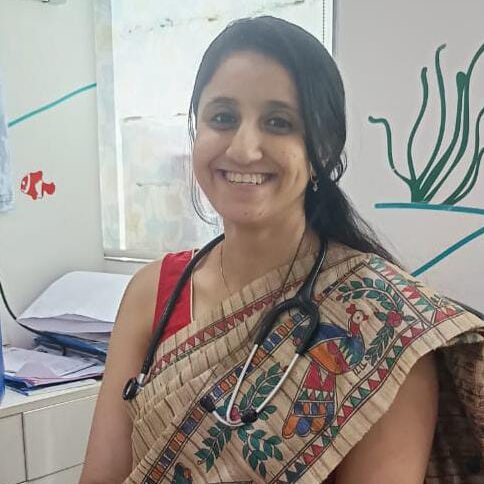
Dr Tanvi Modi,
MBBS,
MD, DNB (Paediatrics)